Critical: India can bridge global AI divide: Aalok Mehta
THE recently concluded summit in India on AI has widened global discussions on artificial intelligence, bringing more countries into conversatio...
Latest update: The world of News is buzzing today as reports confirm that India can bridge global AI divide: Aalok Mehta. This story has grabbed the eyeballs of experts and the public alike.


Core Insights
- Investigative findings derived from cross-referenced primary sources.
- Sector-specific impact assessments conducted by our editorial desk.
- Real-time monitoring of ongoing developments and official updates.
Preliminary reports suggest that this event could have a significant impact in the coming days. As we delve deeper into the details, here is everything you need to know about this unfolding situation.
Key Highlights
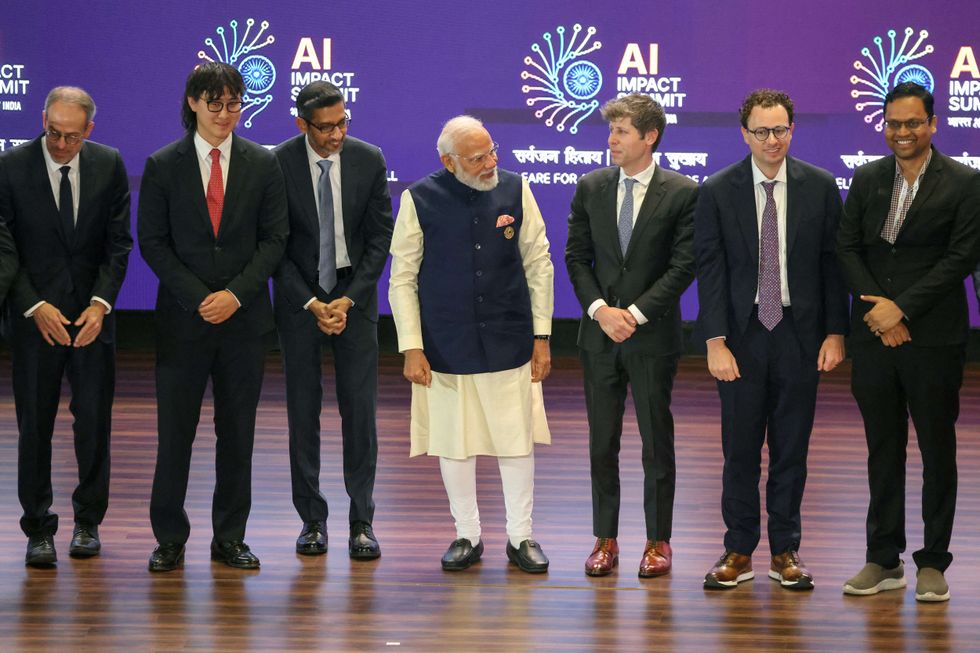
THE recently concluded summit in India on AI has widened global discussions on artificial intelligence, bringing more countries into conversations that were earlier led by a few, Aalok Mehta, director of the Wadhwani AI Center at the Center for Strategic and International Studies (CSIS), said.Held at Bharat Mandapam in New Delhi from February 16 to 21, the conference brought together politicians, industry leaders, experts and policymakers to discuss the governance and deployment of AI. It was the fourth annual gathering on AI, with global technology firms and governments announcing partnerships, investments and policy approaches during the week. Aalok Mehta suggested India’s linguistic diversity and key sectors such as agriculture, health, and education could be areas where AI can be deployed.Eastern Eye“For a long time, conversations around AI governance have largely been driven by a few specific countries,” Mehta told Eastern Eye in an exclusive interview on the eve of the summit. “What the India AI Impact Summit does is broaden that conversation. It creates space for countries deeply affected by AI’s economic and social impacts, but often underrepresented in rule-setting forums, to articulate their priorities.” Mehta, who took part in events at the summit, said India’s scale and experience placed it in a distinct position in these discussions, as the country could “act as a bridge between advanced economies and emerging markets.” The Wadhwani Center for AI and Advanced Technologies, launched in 2023, focuses on informing policymakers and shaping how AI is deployed. Mehta suggested India’s linguistic diversity and key sectors such as agriculture, health, and education could be areas where AI can be deployed. “India has significant linguistic diversity, and so one promising area is the use of AI to help with translation and making information accessible to more of the population in more languages. We’ve seen the country take some steps in that direction with platforms like BHASHINI,” he remarked Drawing on his experience during the launch of ChatGPT, he said the pace of technological change has outstripped governance systems. “Every major technology cycle is moving faster than the last, and AI has been the fastest yet. ChatGPT came out in 2022, so it’s changed the world significantly in just three or four years,” Mehta said. Such rapid scaling has exposed institutional gaps, he commented adding, “The core challenge now is not just regulating AI, but modernising our institutions so they can be more agile and responsive to technologies that evolve at this speed.” He said the summit also allowed India to represent countries that have not been fully involved in earlier governance discussions. “This represents both a chance for India to represent its AI ambitions to the world, and also to become a voice for countries around the world that have not been involved in discussions around AI governance and AI technology in as significant a way as probably they should have been.” On policy priorities, Mehta said most countries are unlikely to build frontier AI models at scale, due to their prohibitive costs. “These are very expensive, costing tens of billions of dollars now for the most advanced models,” he said. Instead, he said the focus should be on applying existing technologies to domestic challenges. “What countries like India can do is really focus on taking existing AI technology and figuring out specific use cases they can use, that are really tailored to addressing problems India faces.” He added that solutions need to be grounded in local realities, with governments identifying community-level issues and building use cases accordingly. On regulation, Mehta stated global coordination is essential, stating that “AI will impact every sector and every country. It’s important for countries to come together and establish some baseline standards around safety, transparency and accountability that build public trust and allow innovation to scale responsibly.” Mehta highlighted fragmentation in global governance as a key concern, cautioning that differing national rules could create compliance challenges. “If every country in the world has different rules when it comes to AI, then it will be very difficult for companies to develop the technology without dealing with an enormous amount of compliance requirements.” A shared baseline would help address this, he remarked “The goal should be to establish a baseline, which is a shared understanding of what responsible AI governance looks like.” He added that governments must also invest in capacity and skills, noting that “the Indian government should take steps to educate its policymakers, its civil service about AI technology, to take steps to hire experts into the government that understand the technology.” He also called for adaptive regulatory systems, saying, “Governments need iterative regulatory models, where impact can be assessed and revisited to create a feedback loop where governance adapts alongside technology.” Mehta said CSIS and the Wadhwani Foundation participated in the summit through engagements focused on governance, safety and economic impact. “The center is doing complementary work, focusing on issues like AI governance, AI safety, geopolitics, trying to establish ideas and inform policymakers about the relevant ideas so that we can shape the technology in a way that helps communities.”
Additionally, details emerging from the ground suggest that this is a fast-moving scenario. The initial reports focused on the immediate aftermath, but new information is bringing more clarity to the picture.}
The Bigger Picture
To understand the significance of this event, it is important to look at the context. In recent weeks, we have seen similar trends in the News sector. Experts believe that India can bridge global AI divide: Aalok Mehta is not an isolated incident but part of a larger narrative.
Observers have pointed out that historical data often suggests a pattern in such events. However, the scale of this specific development has surprised many.
Expert Analysis & Reactions
The industry has reacted strongly to the news. Social media platforms are flooded with discussions regarding the potential consequences. While some are hopeful, others are urging caution until more official details are released.
One thing is clear: The topic of India can bridge global AI divide: Aalok Mehta will dominate conversations for the foreseeable future. Stakeholders are advised to keep a close watch on official channels.
Final Thoughts
To sum up, as the situation around India can bridge global AI divide: Aalok Mehta continues to unfold, Bluenton News remains committed to bringing you the latest updates. We encourage our readers to follow our feed for more comprehensive coverage.
For the full original report and verified details, you can visit the source directly: Read More Here.